
What $108K in Lobbying Buys Marion County — and the Science It's Trying to Outrun
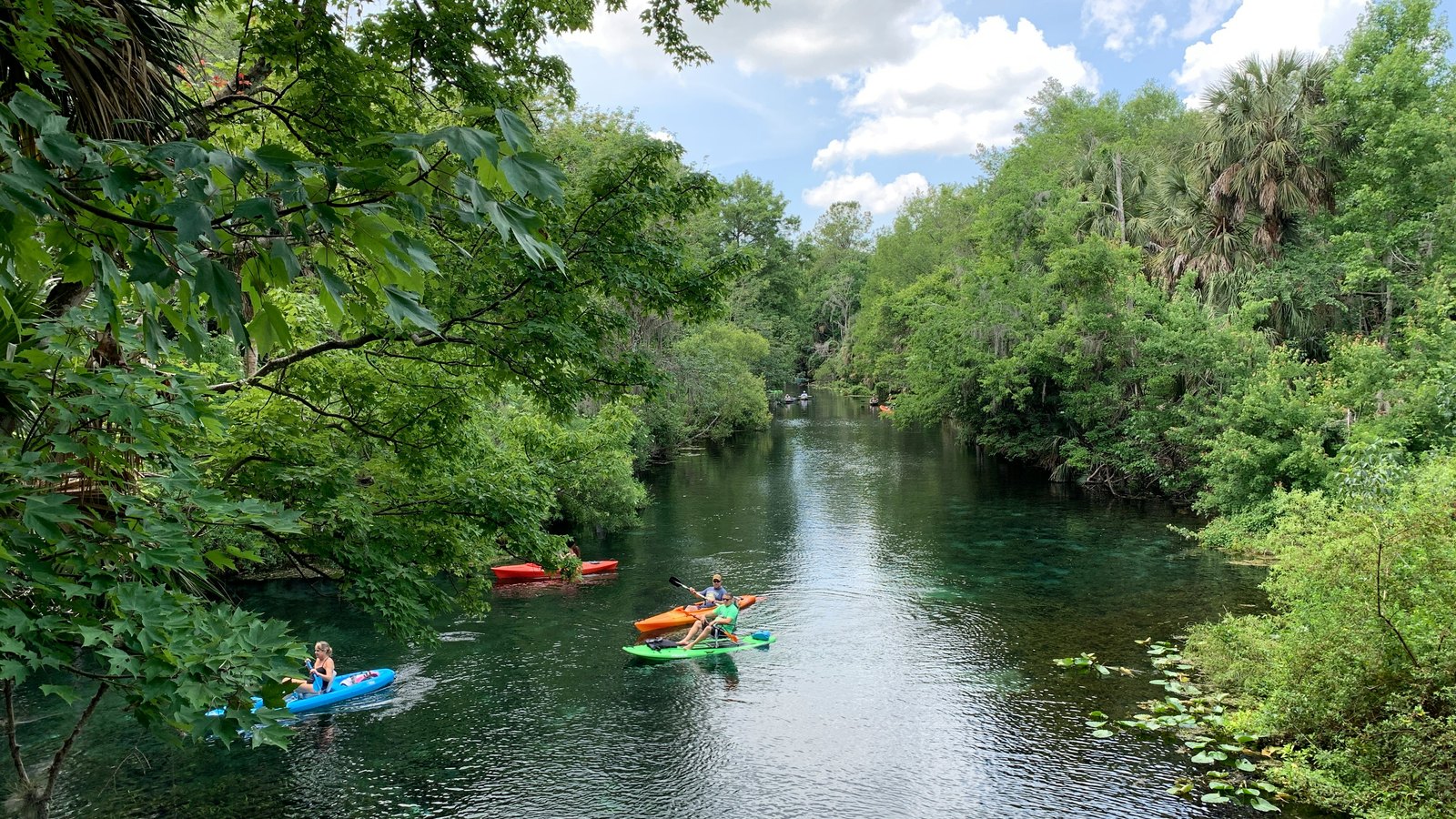
When you hear that Marion County is paying $108,000 to a Tallahassee lobbying firm to persuade the Florida Department of Environmental Protection to ease its restrictions, alarm bells start going off. Any Florida resident who remembers the crystal-clear water of Rainbow Springs and Silver Springs wants to do something to protect them. The firm Marion County hired — Ballard Partners — has notable political ties: U.S. Attorney General Pam Bondi was a partner there before her appointment, and White House Chief of Staff Susie Wiles spent eight years at the firm before joining the Trump administration.
But the county's budget records since 2020 tell a more complicated story than the lobbyist hire alone suggests. Marion County has committed roughly $59.3 million in nitrogen-reduction purchase order authority across septic-to-sewer conversions, stormwater retrofits, and wastewater treatment upgrades. The pace has been uneven — a $20.9 million pre-COVID push on the Northwest Regional water reclamation facility in FY2019-20, two near-dormant pandemic years, and then a methodical post-COVID ramp through Silver Springs Shores Phase I and II construction in FY2023-24 and FY2024-25. So if the county is investing this aggressively, what's actually causing the springs to suffer?
Nitrogen.
Central Florida sits on the remains of an ancient sea bed, and the limestone underneath is full of holes. Rainwater doesn't slowly filter through layers of soil here — it can drop quickly through sinkholes and porous rock straight into the Floridan Aquifer, the same aquifer that feeds Silver and Rainbow Springs. When that water carries nitrogen with it — from septic tanks, agricultural fertilizer, lawn fertilizer, and sports turf — the springs respond by growing algae, choking out native vegetation, and turning cloudy.
FDEP's own Nitrogen Source Inventory Loading Tool shows the picture clearly. Septic systems and agriculture each account for 32% of the nitrogen load to the Upper Floridan Aquifer in the Silver and Rainbow basin. Urban turf adds another 20%. The remaining 16% comes from sports turf, atmospheric deposition, wastewater treatment facilities, and other sources combined. Septic isn't the dominant problem — it's tied for first.
FDEP estimates that the basin currently receives more than 4.3 million pounds of nitrogen per year, against a target of 872,862 pounds — meaning the county and other responsible parties are supposed to cut nitrogen by more than 3.1 million pounds annually. The 2016 Florida Springs and Aquifer Protection Act assigns this work out through a Basin Management Action Plan, or BMAP. The current Silver and Rainbow BMAP took effect April 27, 2026, with tiered milestones: 30% reduction by 2028, 80% by 2033, and 100% by 2038. The plan covers 1,668 square miles across six counties — Marion, Alachua, Levy, Putnam, Sumter, and Lake — plus nine municipalities and the Villages community development districts.
Marion County receives roughly $800,000 a year in dedicated FDEP BMAP support funding, plus another $6 million in Florida Springs Grant Program revenue in FY2024-25. It spends far more than it receives. The county's own engineer says the math doesn't work.
In a May 2, 2025 letter to FDEP, Marion County Engineer Steven Cohoon laid out the problem in unusually direct language. The proposed reduction targets, he wrote, are "presently unattainable due to environmental, economic, technical, and logistical constraints." He noted that converting the entire county to central sewer — the single biggest available nitrogen reduction lever — would cost an estimated $4 billion. "Our annual average investment in septic-to-sewer conversions is $10 million," Cohoon wrote, "meaning it would take over 400 years at this rate to meet the target."
Cohoon also pointed out that 67% of the required nitrogen reduction has been assigned to on-site septic systems — even though septic contributes only 32% of the load. Septic permits are issued by the state Department of Health, not by the county, though state law has already preempted much of the easy path: since July 1, 2023, F.S. §381.00655 prohibits new conventional septic systems on lots of one acre or less where central sewer is available, and within the BMAP all conventional systems must be enhanced or sewered by 2038.
The recommendation to engage Ballard Partners came from a group of senior county staff, not from any single official. According to the April 7 staff report, the proposal was developed jointly by County Attorney Matthew Minter, County Administrator Mounir Bouyounes, Assistant County Administrators Angel Roussel and Tracy Straub, County Engineer Steven Cohoon, and Utilities Director Tony Cunningham. Cunningham had prior working experience with David Childs, the Ballard partner who would lead the Marion County account, from Childs' earlier work at state agencies — a relationship-driven choice rather than a purely political one.
The staff position was that litigating the BMAP rule directly against FDEP would cost more and yield less than negotiation. Viewed against the scale of potential liability, $108,000 to engage with a state agency is a defensible bet — even before considering that the county already spends similar amounts on its existing state and federal lobbyists, GrayRobinson and Thorn Run Partners.
There's also a wrinkle that complicates the county's "structurally unfair" framing. FDEP itself, in the same April 2026 BMAP, admits the plan isn't working — but locates much of the failure outside septic. "Total nitrogen reductions are not on track to meet the next milestone," the BMAP states. "Many agricultural producers are not compliant in their requirements to enroll in applicable BMPs or conduct water quality monitoring." And: "As agricultural loadings are the prevailing source of loadings in this BMAP, the FDACS Agricultural Cooperative Regional Element to identify substantial regional projects and advanced BMPs needs to be defined, funded, and implemented to reduce agricultural loads."
Translation: agriculture is the biggest contributor, agricultural producers aren't complying, and the regional program meant to address agriculture isn't even funded yet. That's a stronger version of the county's complaint than the county itself has made publicly — and it points to a question worth asking the lobbyists the county just hired. Whose reduction targets are they actually trying to ease?
So on its own, the lobbyist hire is reasonable. The bigger question — the one Sunshine Data will examine in a follow-up — is what's happening to the county's existing nitrogen-reduction tools at the same time the county is asking the state for relief.
Methodology: Based on Marion County budget records (2019–2025), county commission materials, engineering correspondence, and state water quality planning documents. All sources are public records available under Florida law.